The first time I opened a kettle from a farmhouse well in Derbyshire, I thought someone had poured chalk slurry inside it. The heating element wore a crust as thick as a biscuit. Every cup of tea tasted faintly of limestone. We swapped kettles, descaled with vinegar, tried filters at the tap, and even flirted with a magnetic gadget that promised miracles. Nothing stuck. What finally changed the picture wasn’t a gimmick at the spout. It was upstream, in the veins of the house itself: new pipework, properly sized and matched to the water chemistry. Repipe Plumbing isn’t a flashy phrase, but it might be the most reliable way to disarm limescale at its source.
Most homeowners meet scale in their kettles first. Then it shows up in coffee machines, steam irons, humidifiers, and dishwashers, and it ends with the boiler moaning, the water heater losing efficiency, and the showerhead sputtering like a clogged flute. Scale is a symptom, not a standalone problem. If you want to fix it for good, you have to respect the physics, the chemistry, and the hydrodynamics of the water circuit from the street main to the appliance. That is the promise of repiping done thoughtfully.
Why water leaves rock behind
Hard water is loaded with calcium and magnesium ions that originated in limestone, dolomite, or chalk aquifers. When water is pressurized underground, these minerals remain dissolved as bicarbonates. Once the water warms or depressurizes, the equilibrium tips. Calcium carbonate and magnesium carbonate, both less soluble at higher temperatures, fall out of solution. They like to stick to hot surfaces, crevices, and any texture that interrupts laminar flow. Your kettle’s element provides the perfect landing pad.
People chase silver bullets for scale: pour vinegar, switch the kettle brand, change cleaning routines. These work for a while, but they fight downstream symptoms. The upstream reality is that the pipe material, diameter, age, interior roughness, and joints all change the flow. They nudge water toward turbulence, create micro eddies, and give mineral crystals places to nucleate and grow. Once scale has a foothold inside the pipes, flakes seed further growth, and appliances become the scene of the final act.
Repipe Plumbing matters because fresh, well-chosen pipework reduces those seeding points, equalizes velocities, and stabilizes temperatures. It may not change the hardness, but it changes the places where hardness becomes rock.
What old pipes secretly do to your water
I’ve cut into fifty-year-old galvanized lines that looked like old arteries: rough, constricted, and mottled with mineral scabs. Copper doesn’t rust like steel, but it develops patina, pitting, and solder lip edges. Even CPVC and older plastics can deform at fittings and develop ridge lines where solvent wasn’t spread evenly. Every tiny ridge is a harbor. Every undersized run becomes a river rapid that churns the water and lifts dissolved gas, making the carbonate drop sooner.
Most houses accumulate changes over decades. Someone added a bathroom in the 90s with whatever pipe was on hand. A handyman cut in a T to feed a garage spigot, left a burr, never flushed. The water main was replaced, but the basement still has a stubborn section of 3/8 inch feeding a modern on-demand heater, so the unit pulses and overheats, and scale locks onto the hottest portion of the heat exchanger. The residents only notice at the kettle because kettle boils are dramatic and frequent.
The pattern is often the same: visible scale in appliances, then evidence of inefficiency in heaters and dishwashers, then angry shower valves. Repipe Plumbing is not a cosmetic facelift. It is a change in the water’s journey. Make that journey smoother, and the water carries more of its minerals to drain without sticking around.
How repiping actually lowers scale loads downstream
The trick is not to wish minerals away. It is to deny them environmental triggers. When we repipe, we control five levers that collectively reduce limescale in kettles and appliances.
- Interior smoothness and nucleation control Temperature stability across the system Flow velocity and pressure balance Reduction of stagnation zones and dead legs Material interactions that alter crystal habits
The smoothest modern pipes, properly joined, offer fewer nucleation sites. Fewer nucleation sites means fewer solid crystals in the line, so less material reaches the kettle ready to lock onto heat. Pressure-balanced, right-sized circuits avoid surges and short, hot bursts that shock minerals out of solution. Eliminating dead legs starves the biofilm and sludge that trap minerals and create gritty seed particles. Finally, the right material incites the “wrong” crystal habit for persistent scale, nudging it toward forms that don’t adhere as aggressively.
I’ve watched a stubborn coffee maker go from monthly descaling to quarterly after a repipe without any added softener. Not magic, just quiet hydrodynamics doing their job.
Pipe materials, from crust-makers to scale-tamers
Every material has a personality with hard water. The goal is not to crown a universal winner, but to pick the right match for your water, layout, and appliances.
Copper carries heat well and resists oxygen diffusion, but it is not innocent. In aggressive water, it develops micro pitting that catches mineral crystals. Solder joints, especially with generous fillets, make ridges that interrupt flow. That said, a well-soldered copper system with cleaned, reamed pipe ends and carefully deburred interiors can perform admirably. In very hard regions, I still lean away from all-copper runs to tankless heaters, where the heat exchanger is already a scale magnet.
CPVC tolerates temperature and resists corrosion better than many expect. Its Achilles’ heel is joint quality. Any excess cement or misalignment makes ledges. Overheated sections near tankless units can soften, then re-harden with a ripple. If I inherit CPVC that looks tidy and even, I won’t rip it out on principle, but I rarely specify it new for primary hot trunks where scale control is the mission.
PEX, especially PEX-A with expansion fittings, offers a near-ideal interior surface, minimal fittings, and gentle sweeps. Push-fit fittings have internal O-rings and can clip flow if overused, so I keep them for serviceable spots and transitions. Crimp or expansion fittings, properly executed, leave little to disturb the water. With PEX, the art lies in layout: home runs to a manifold prevent pressure dips, and the fewer elbows you use, the fewer micro eddies you introduce.
Stainless corrugated is for fixtures and equipment connections, not long runs, but it’s worth noting that corrugations act like turbulence generators. Using extra-long corrugated connectors just because they are flexible is asking for micro scaling. Keep them short and smooth where possible.
The most scale-friendly systems I’ve seen in hard water look like this: copper or PEX trunks sized for the demand, PEX branches radiating from a manifold, clean transitions near appliances with short, smooth connectors, and no Frankenstein patchwork of three materials in one run.
Size matters more than most people think
The number on the pipe isn’t just a capacity metric. It controls flow velocity and pressure stability. Undersized pipes create speed, speed creates turbulence, turbulence frees dissolved gas and amplifies temperature gradients, and that chain ends with crystals. Oversized pipes create long residence times and cooling, which can foster stagnation and particulate settlement that later lifts as seed crystals.
For kettles and small appliances, what matters is the last few meters of the run. A properly sized branch line that delivers stable temperature without pressure seesawing tends to produce fewer scale flakes. In homes that grew piecemeal, I often replace a ragtag daisy chain with a simple manifold. Each branch gets its correct diameter and length. The kettles and coffee makers, which usually live at the kitchen sink, benefit immediately. You’ll notice a smoother flow pattern that doesn’t “spit” at the onset of hot water, and that smoother pattern translates to less violent boiling inside the kettle, which indirectly helps scale adherence.
Here’s a small, repeatable test: after repiping and right-sizing, fill a glass from the hot tap and watch for bubbles. Before, you may have seen frothy professional plumbing repipe Happy Valley aeration as pockets cleared. After, the draw looks calmer, with fewer microbubbles. That isn’t just aesthetics. Less gas coming out of solution means a less favorable stage for carbonate precipitation.
Dead legs, mixed metals, and other scale traps
If you want scale to party, give it a quiet room. Dead legs, those capped or rarely used branches, become silty jars where minerals settle, biofilm grows, and corrosion seeds form. Open the tap once in a while and that stew surges toward your appliances. Repipe Plumbing is the time to purge dead legs ruthlessly. Tie off or remove abandoned runs, and in large homes, consider a low-volume continuous recirculation loop on the hot side with a smart pump that throttles down when not needed. Keep velocities gentle. Recirc done wrong can increase scale. Done right, it prevents temperature stratification and stagnation without whipping the water.
Mixed metals create galvanic couples. A brass fitting married to galvanized steel upstream behaves like a small battery. The dissolving partner contributes metallic ions and roughness. Every added rough edge is a future limescale mount. Repiping is the moment to rationalize materials and use proper dielectric unions where transitions are necessary. The goal is an electrically quiet, chemically boring pathway.
Temperature, the quiet king of scale
Heat is the accelerator. Scale precipitates fastest on the hottest surfaces and during rapid temperature swings. Beyond the well-known advice of not running water heaters too hot, the plumbing layout matters. Long, uninsulated hot runs cool off between uses, forcing your heater to deliver shock heat with every draw. That surge increases precipitation in the first appliance hit by the hot water, often the kettle or coffee maker.
During repipe, I insulate hot runs generously, even those only a few meters long. I position and size pipes to minimize thermal swings. If a tankless heater is part of the plan, I allow a small buffer tank or a smart recirc loop to smooth pulses. On high hardness water, a tankless unit without those smoothing features tends to spike scale. People blame the brand when the real culprit is the hydraulic and thermal script we handed it.
Filters, conditioners, and softeners alongside a repipe
Repipe Plumbing doesn’t forbid treatments. It gives them a fair chance to succeed. There are three broad categories that matter for scale and appliances.
Sediment and carbon filtration prevent grit and particulate matter from seeding scale. A 5 to 10 micron sediment filter at the main can save kettles by eliminating nucleation trash. Carbon is about taste and chlorine reduction, indirectly helpful for rubber seals and O-rings.
Template-assisted crystallization (TAC) and other conditioners try to alter crystal habit so minerals remain suspended as micro crystals that wash through. Their success depends on the absence of iron, manganese, and high sediment. A sloppy plumbing layout with turbulence and dead legs will undo much of the benefit. After repiping, TAC devices usually perform closer to their promises because the water is less abused along the way.
Traditional ion-exchange softeners replace calcium and magnesium with sodium or potassium. They are blunt but effective, dropping scale formation dramatically and making soap feel slick. If you cook with reduced-sodium diets or dislike the feel of softened water, you can partial-soften: leave cold kitchen taps unsoftened, soften hot lines and appliance feeds. Repiping makes that split easy, with clean loops and dedicated branches. It also lets you add bypasses for future tweaks without the plumber’s equivalent of keyhole surgery.
Real numbers from real kitchens
Consider a townhouse with 280 to 320 ppm as CaCO3 hardness, a tankless heater, and a brass spaghetti of half-inch copper between the meter and the kitchen. The owners descaled the kettle every two weeks. The coffee machine’s maintenance light came on monthly. We repiped the main and hot trunk in 3/4 inch, stepped down to 1/2 inch branches via a central manifold, removed two dead legs, insulated the hot run, shortened the corrugated connectors, and added a 10 micron sediment filter. No softener, no TAC. Three months later, the kettle needed a quick citric acid soak after eight weeks, not two. The coffee machine doubled its interval. Subjective? Yes. But repeat this across a dozen homes and the pattern holds: smoother flows and cleaner interiors reduce downstream scaling pressure.
In a different case, a rural house with 360 to 420 ppm hardness and a tired galvanized maze upgraded to PEX home runs, added a compact softener on the hot side only, and kept cold kitchen taps unsoftened. The kettle still showed faint dust after six weeks, but no crust. The owners described it as the difference between wiping window mist and scraping ice.
The kettle’s-eye view of your plumbing
A kettle is a fast-boiling lab beaker with lousy instrumentation. It tells you, in the crudest terms, how your plumbing treats water. After repiping, observe four signals.
- How fast scale dust reappears after a deep descale Whether the element accumulates thick flakes or fine, easy-to-wipe film The sound of the boil, whether you hear harsh sizzling early or a smoother ramp The behavior of the spout filter, whether it clogs with grit or stays mostly clear
If those improve, your pipework is no longer feeding the kettle with pre-seeded crystals and thermal shocks. Pair that with periodic descaling and you’ve changed the maintenance cadence from nagging to occasional.
Repiping tactics that pay off for appliances
I don’t repipe a house like a museum exhibit. I target flows and pain points. For kettles and appliances, several tactics outperform their effort cost.
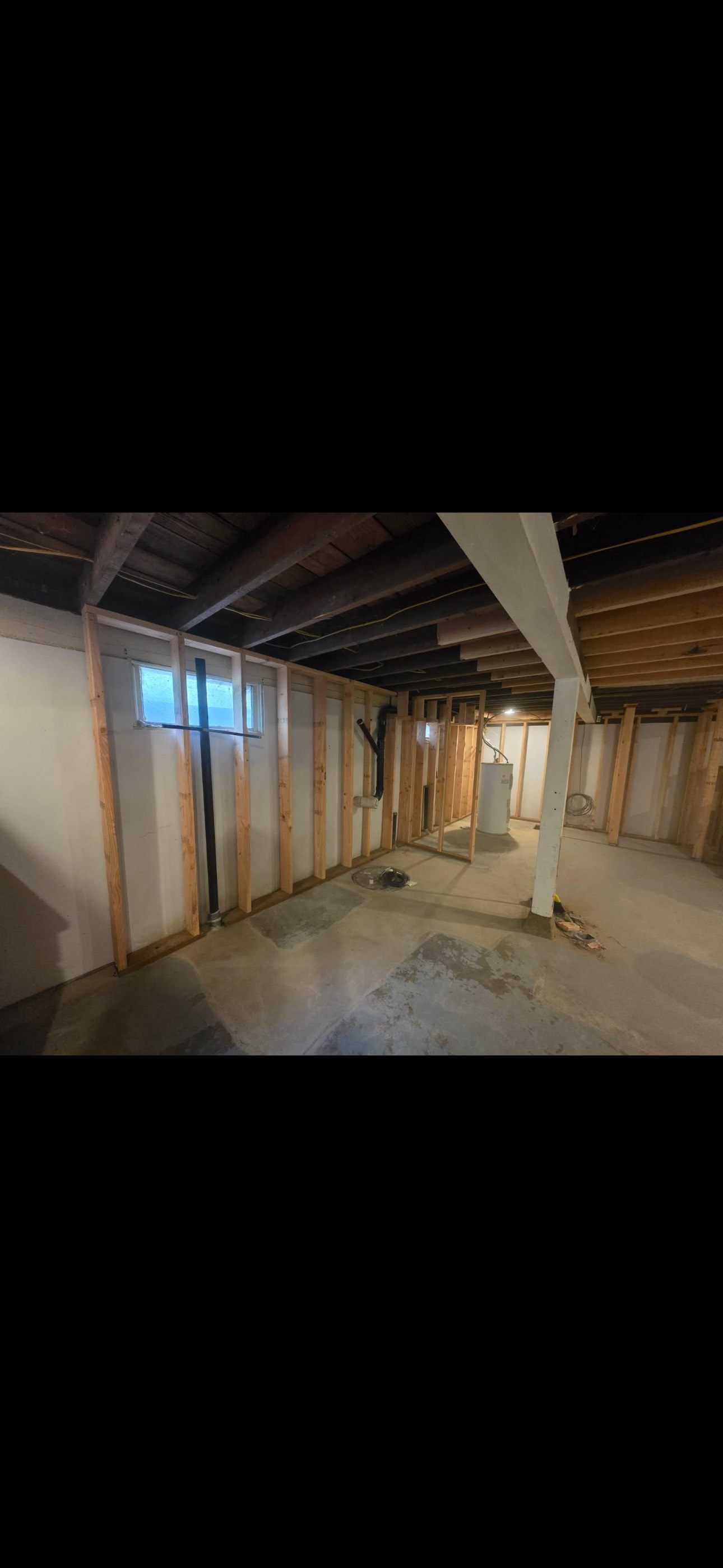
Start at the meter or well pressure tank and give the first ten meters of pipe some love. Any roughness or undersizing there haunts the rest of the house. Step up diameter where needed, use sweeping turns, and keep transitions minimal.
Replace patchwork sections closest to the kitchen and laundry. Appliances live on the branch lines. If a full-home repipe isn’t in budget, prioritize the last mile.
Add a small service loop before the kitchen sink with isolation valves. It makes retrofitting a filter or conditioner painless later. When kettles start acting up again in five years, you have an easy place to intervene without cutting walls.
Mind the heater interface. On tankless units, keep the first meter of piping smooth and insulated, and include service valves for descaling. For tanks, avoid long, exposed hot runs that cool and reheat. The temperature stability you buy here shows up as fewer crusty surprises in the kettle.
Region, water source, and expectations
Get your local water report if you are on municipal supply. It tells you hardness, pH, iron, manganese, and sometimes silica. If silica is high, you may see glassware haze that won’t respond to limescale tactics. If iron sits above 0.3 mg/L, conditioning devices can foul quickly. Rural wells vary seasonally. After heavy rain, hardness can dip and iron can spike. When planning a repipe, match your strategy to your water’s mood swings, not an average on a brochure.
Expectations matter. Repiping isn’t a spell that banishes scale in all conditions. In ultra-hard areas above 400 ppm, you still benefit from smoother pipes, but you may also need softening for the full appliance effect. The upside of repipe first is that any device you add works better and lasts longer because it isn’t compensating for a rough, turbulent highway.
A brief detour into crystal habit
Not every limescale crystal behaves the same. Calcite sticks, aragonite tends to wash. Temperature, surfaces, and flow patterns nudge which form appears. Smooth PEX interiors, mild turbulence, and certain conditioners bias toward aragonite micro crystals. Rough metal surfaces and sharp temperature step changes favor calcite plates that weld to heaters and elements. Repiping, by smoothing and stabilizing, doesn’t guarantee aragonite, but it shifts probabilities your way. In practice, that shows up as dust that wipes off instead of plaques that need scraping.
Money, mess, and the value of not scraping kettles
Homeowners often weigh the cost of repiping against the visible symptom: a crusty kettle that costs twenty pounds to replace. But the kettle is just the messenger. Scale makes water heaters consume more energy, shortens the life of heating elements, and clogs valves. A mild scale layer as thin as 1.5 millimeters can raise energy use in water heating by 10 to 15 percent, sometimes more for tankless exchangers. Over a few winters, that erases the price gap between quick fixes and a proper repipe.
If walls are open for a remodel, seize the chance. Repiping in an open renovation is half the labor of chasing pipes inside finished walls. I’ve watched clients skip it to save a few thousand, then spend more over five years on heater service calls, appliance replacements, and the softener they swore they didn’t need.
Maintenance after the big change
Once the pipes are right, the job isn’t finished forever. Scale control is a discipline, not a single act. Treat repiping as the reset that makes your maintenance light. Then keep it light with a few habits.
- Descale kettles and coffee makers with a mild acid like citric every 6 to 12 weeks, adjusting for hardness and usage. Check and flush the sediment filter quarterly. If it loads fast, consider stepping to a two-stage setup with a 20 micron followed by a 5 to spread the work. Exercise isolation valves twice a year so they don’t seize. A stuck valve defeats the convenience of a good layout. Watch pressure. A simple gauge near the water heater shows if regulators drift. High pressure increases velocity and scale trouble. Keep it near 55 to 65 psi for most homes unless fixtures demand otherwise.
Those are small moves compared to wrestling with crust on a weekly basis. The repipe turns scale from a recurring skirmish into a manageable chore.
A field story: the kettle that stopped hissing
A retired engineer in a 1970s bungalow had a ritual. Boil water, dump the chalky bits from the spout screen, rinse, repeat. He tracked maintenance like a test lab. Hardness sat at 300 ppm. We replaced a quilt of copper, galvanized, and CPVC with a PEX manifold system, removed two capped tees, reamed the remaining copper stubs properly, and wrapped the hot runs. He declined a softener, curious how far plumbing alone would take him.
He called sixty days later, amused that the kettle boiled quietly now. Not silent, but without the angry hiss at the start. The screen still collected fine powder, maybe half as much, and he hadn’t seen a hard crust on the element. He measured his coffee machine’s descale cycle at 2.1 times the pre-repipe interval. Not peer-reviewed science, just a meticulous homeowner confirming what professionals see daily: when water has a smooth road, it behaves better.
When repipe isn’t the first move
Sometimes, the smartest sequence is test, treat, then repipe. If your water test shows iron above 0.5 mg/L or manganese above 0.05, condition those first. Iron fouls everything, and repiping won’t stop orange sludge from seeding scale. If your pressure is erratic because the regulator is failing, replace it before planning pipe work. If your heater is a dinosaur, swap it along with the near-pipe kit. A new heater feeding old, rough lines wastes the opportunity. A careful plumber will stage the work to avoid redoing connections twice.
The quiet payoff in the kitchen
No one throws a party for new pipes. They hide. But kettles and appliances notice in their own subtle way. The tea tastes cleaner, less chalk on the tongue. The coffee machine doesn’t nag. The dishwasher’s heater lasts beyond the warranty stretch. And when you open the kettle months later and see only a thin dusting, you’ve touched the real reward of Repipe Plumbing: not perfection, but a house that lets water move as if it still ran through river stone, not through a rocky warren of old engineering choices.
That is the art here. We aren’t just swapping pipes. We are rewriting the water’s journey from the street to your cup. Make that journey smooth, stable, and sane, and the limestone stays where it belongs, back in the hills, not glued to your kettle.
Business Name: Principled Plumbing LLC Address: Oregon City, OR 97045 About Business: Principled Plumbing: Honest Plumbing Done Right, Since 2024 Serving Clackamas, Multnomah, Washington, Marion, and Yamhill counties since 2024, Principled Plumbing installs and repairs water heaters (tank & tankless), fixes pipes/leaks/drains (including trenchless sewer), and installs fixtures/appliances. We support remodels, new construction, sump pumps, and filtration systems. Emergency plumbing available—fast, honest, and code-compliant. Trust us for upfront pricing and expert plumbing service every time! Website: https://principledplumbing.com/ Phone: (503) 919-7243